Buildings 
Home
 

Overview 

Design Aids 

Building  Presentations 

Software 
Solutions
 

Resources 

Technical 
Support
 

Regional  Contacts 


Mass Concrete
Buildings Home > Mass Concrete

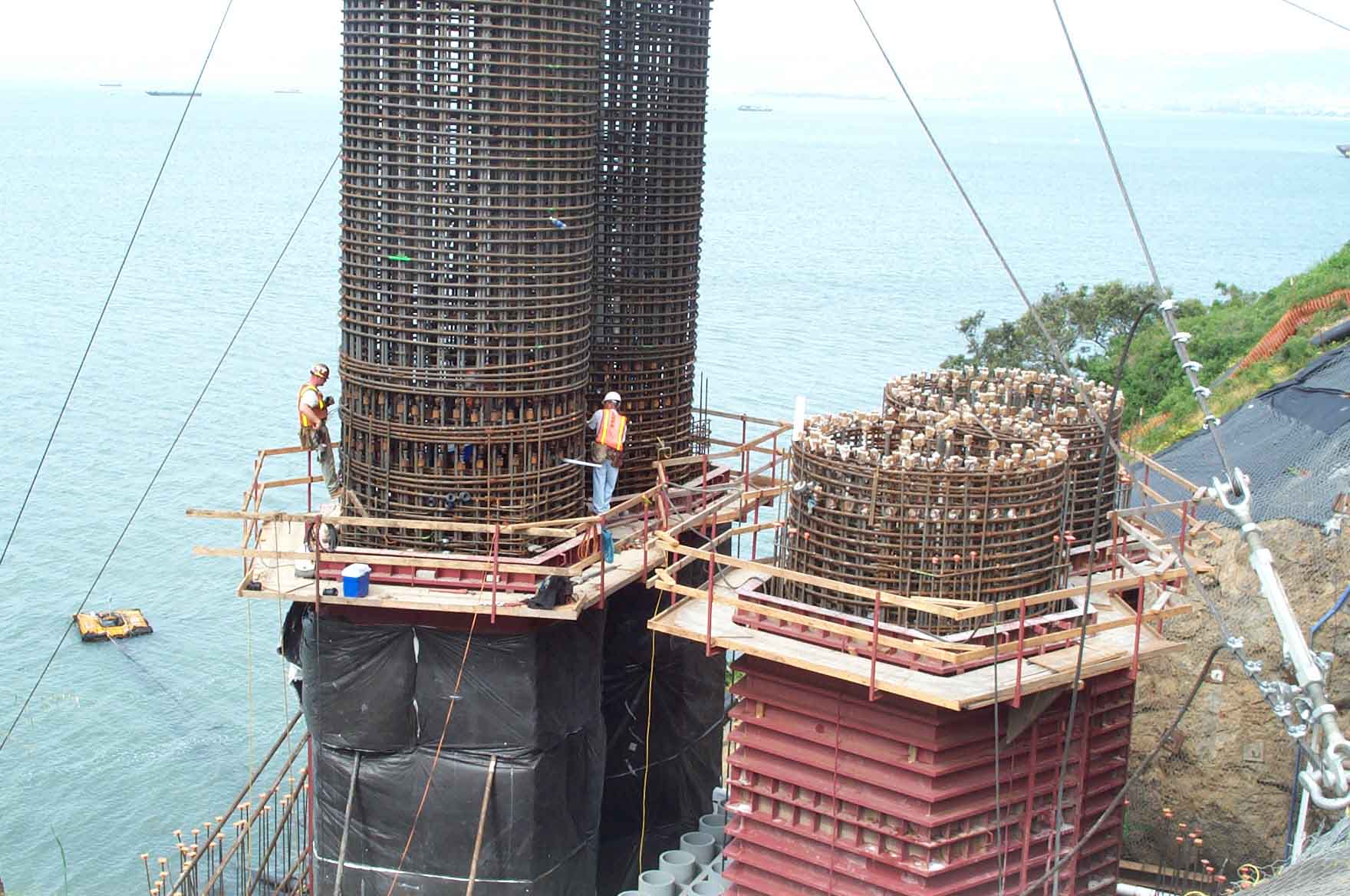
Placing mass concreteMass concrete brings with it many challenges, among them the generation of high heat and problems that can stem from it. While creating these projects can be difficult, careful design of mass concrete can minimize or eliminate issues, and new research points to approaches that will allow us to create bigger projects than ever before.

Defining Mass Concrete

ACI Committee 116 defines mass concrete as “any large volume of cast-in-place concrete with dimensions large enough to require that measures be taken to cope with the generation of heat and attendant volume change to minimize cracking.” This categorization can include structural components with moderate- to high-cement-content concrete, massive structural elements of mat foundations, and to dams and other large structures that use concrete with a low cement content.

In any mass concrete application, temperatures rise through heat of hydration. As the interior concrete rises in temperature, the outer concrete may be cooling and contracting; if the temperature varies too much within the structure, the material can crack. A variety of factors influence temperature changes, including the size of the component, the amount of reinforcement, the ambient temperature, the initial temperature of the concrete at time of placement and curing program.

Design Options

Engineers use a variety of approaches to tackle the potential for thermal cracking and successfully create mass concrete. These methods include: refining concrete mix proportions, protecting exposed surfaces and formwork from environmental extremes, using aggregate with desirable thermal properties, pre-cooling the concrete constituent materials, using internal pipes to cool the concrete itself, and placing the concrete in several lifts or pours. More.

Some designs include supplementary cementitious materials in the mix, including slag cement or fly ash. The Slag Cement Association offers some guidance on specifying slag cement for mass concrete here. The American Coal Ash Association offers information here on the benefits and specification of fly ash.

Industry Resources

CTLGroup offers a collection of articles on mass concrete here. ACI publication 207.1R-96: Mass Concrete examines mass concrete in detail.

Publications
Specifications for Structural Concrete for Buildings (ACI 301-05) (LT188)
This is the most widely used structural concrete reference specification for buildings, covering materials and proportioning of concrete; reinforcing and prestressing steels; production, placing, finishing, and curing of concrete; and formwork design and construction. Methods of treatment of joints and embedded items, repair of surface defects, and finishing of formed and unformed surfaces are specified. Separate sections are devoted to architectural concrete, lightweight concrete, mass concrete, prestressed concrete, and shrinkage-compensating concrete. Provisions governing testing, evaluation, and acceptance of concrete as well as acceptance of the structure are included. Published by the American Concrete Institute.
Design and Control of Concrete Mixtures, 14th Edition (EB001)
This definitive reference on concrete technology covers fundamentals and detailed information on freshly mixed and hardened concrete. Extensively updated and expanded, this new edition discusses materials for concrete, such as portland cements, supplementary cementing materials, aggregates, admixtures and fibers; air entrainment; procedures for mix proportioning, batching, mixing, transporting, handling, placing, consolidating, finishing, and curing concrete; precautions necessary during hot- and cold-weather concreting; causes and methods of controlling volume changes; commonly used control tests for quality concrete; special types of concrete, such as high-performance, lightweight, heavyweight, no-slump, roller-compacted, shotcrete, mass concrete and many more. Applicable ASTM, AASHTO, and ACI standards are referred to extensively.

High-Strength Concrete in Massive Foundation Elements (RD117)
Evaluates high-strength concrete in drilled shafts (caissons) for temperature rise, strength, stiffness, cracking and other characteristics.


Concrete for Massive Structures (IS128)
This volume offers information on mass concrete for use in dams, locks, large bridge piers or caissons, and foundations. It also includes new information on massive structural reinforced concrete placements that offers engineers and contractors an opportunity to construct massive concrete sections faster and more economically.

Design Aids—Mass Concrete
Mass Concrete Frequently Asked Questions
Mass Concrete Article—Controlling Temperature
Mass Concrete Article—Temperature Specs
Mass Concrete Help Site—CTL
ACI Article: Liquid Nitrogen for Concrete Cooling
ACI Article: Minimizing Temperature Differentials in Mass Concrete
Constructing a Mat Slab - Article from Concrete Construction, February 2005
Great Thickness Requires Great Length - Article from Roads and Bridges, January 2005

Professional Development Series—Engineering Mass Concrete Structures


More information is also available online from CTLGroup:
Mass Concrete Consulting Overview
Save Time and Money on Mass Concrete Construction

Back to top


Design Resources:

Codes and Standards
Concrete Tanks
Emerging Trends
ICF Buildings
Masonry Buildings
Mass Concrete
Novice Engineers Series
Post-Tensioned Concrete
Precast/Prestressed Concrete
Reinforced Concrete
Shotcrete
Sustainable Design
Tilt-Up Concrete

 
Careers | Sitemap | Disclaimer | Privacy Policy | © 2008 Portland Cement Association - All Rights Reserved