Portland cement concrete usually does not have good resistance to acids. Some weak acids, however, can be tolerated, particularly if the exposure is occasional (Table 1). There are essentially three ways to improve concrete’s resistance to acids, (1) choosing the right concrete composition to make it as impermeable as possible, (2) isolating it from the environment by using a suitable coating or (3) modifying the environment to make it less aggressive to the concrete.
Acids attack concrete by dissolving both hydrated and unhydrated cement compounds as well as calcareous aggregate. In most cases, the chemical reaction forms water-soluble calcium compounds, which are then leached away. Siliceous aggregates are resistant to most acids and other chemicals and are sometimes specified to improve the chemical resistance of concrete.
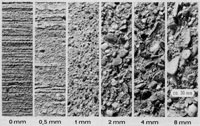
Fig. 2: Concrete surfaces with different depths of erosion. Photo courtesy of VDZ
Concrete deterioration increases as the pH of the acid decreases from 6.5. In fact, no hydraulic cement concrete, regardless of its composition, will hold up for long if exposed to a solution with a pH of 3 or lower. To protect concrete from such severely acidic environments, surface treatments are often used. Many treatments are available and details are given in PCA’s Effects of Substances and Guide to Protective Treatment, IS001.
German researchers tried to improve the resistance of concrete pipes exposed to long-term acid attacks in a pH range between 4.5 and 6.5. The fundamental solution of increasing chemical resistance by lowering concrete’s permeability was used to optimize concrete mix designs. The objective was to keep the erosion rate so low that a service life of about 100 years could be achieved (Fig. 2). It was found that a significant improvement in acid resistance can be achieved by carefully controlled use of fine supplementary cementitious materials. The main reason for the increased acid resistance of the concrete investigated was the formation of a very dense hardened cement paste and aggregate interface with very low porosities. The use of slag cement increased acid resistance as well as portland cements with silica fume (up to 8 percent by mass of cementitious material) or fly ash.
Carbonation by Contact with Water
Natural waters usually have a pH of more than 7 and seldom less than 6. Even waters with a pH greater than 6.5 may be aggressive if they contain bicarbonates. Any water that contains bicarbonate ion also contains free carbon dioxide, which can dissolve calcium carbonate unless saturation already exists. Water with this aggressive carbon dioxide acts by acid reaction and can attack concrete and other portland cement products whether or not they are carbonated. A German specification,
DIN 4030, includes both criteria and a test method for assessing the potential of damage from carbonic acid-bearing water.
Resource
Effects of Substances and Guide to Protective Treatment, IS001
Know what chemicals can attack concrete and how to protect it. This informative document evaluates the effect of nearly 250 substances on concrete and recommends methods to improve durability by resisting and dealing with attacks.