Concrete does a very good job of reflecting solar energy. That is the finding from a Portland Cement Association (PCA) study which measured the solar reflectance index (SRI) of 45 concrete mixes.
Lighter colored materials (such as concrete) generally have a higher solar reflectance. They reflect heat from the sun and do not warm the air very much. Shade, from trees and buildings, and the natural process of evaporation of water from the surface of plants also help keep the air cool.
Darker surfaces such as black roofs and dark pavements generally have a low solar reflectance. They absorb heat from the sun and warm the air through convection, which is generally considered undesirable for its effect on the environment. This may have an immediate, local effect, like heat gain in urban areas, commonly known as
heat islands.
The Test
The PCA SRI study measured the solar reflectance of 45 concrete mixes in accordance with ASTM C 1549,
Standard Test Method for Determination of Solar Reflectance Near Ambient Temperature Using a Portable Solar Reflectometer. These concretes were selected because they represent the range of concrete and concrete constituents typically used in exterior flat work in the United States.
After the typical mix designs were tested, researchers created a mix with the darkest of each ingredient (cement, sand, aggregates and fly-ash) to test in a worst case scenario.
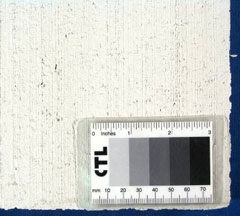
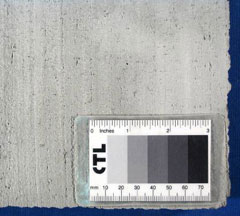
Test samples of concrete flatwork, showing a range of solar reflectivity.
Regardless of mix constituents, concrete in the United States reduce heat islands and qualify for points in the LEED Green Building Rating System. Solar reflectance (sometimes called albedo) is the ratio of solar energy that falls on a surface to the amount reflected. It is measured with a solar spectrum reflectometer on a scale of 0 (not reflective) to 1: (100 percent reflective). Generally, materials that appear light-colored have high solar reflectance and those that appear dark-colored have low solar reflectance. The study revealed that all 45 concretes tested according to ASTM C 1549 have a solar reflectance of at least 0.3 and an SRI of at least 29, and meet or exceed LEED requirements.
Reference
For a detailed report describing test procedures, concrete mixes, materials, and other aspects of the study, see Solar Reflectance of Concretes for LEED Sustainable Sites Credit: Heat Island Effect, SN2982, authored by Medgar L. Marceau and Martha G. VanGeem, Portland Cement Association, Skokie, Illinois, USA, 2007, 95 pages.
Reference
For a detailed report describing test procedures, concrete mixes, materials, and other aspects of the study, see
Solar Reflectance of Concretes for LEED Sustainable Sites Credit: Heat Island Effect, SN2982, authored by Medgar L. Marceau and Martha G. VanGeem, Portland Cement Association, Skokie, Illinois, USA, 2007, 95 pages.